
Six Apps, and You're the Glue: 4 Steps to Make Your Tools Talk to Each Other
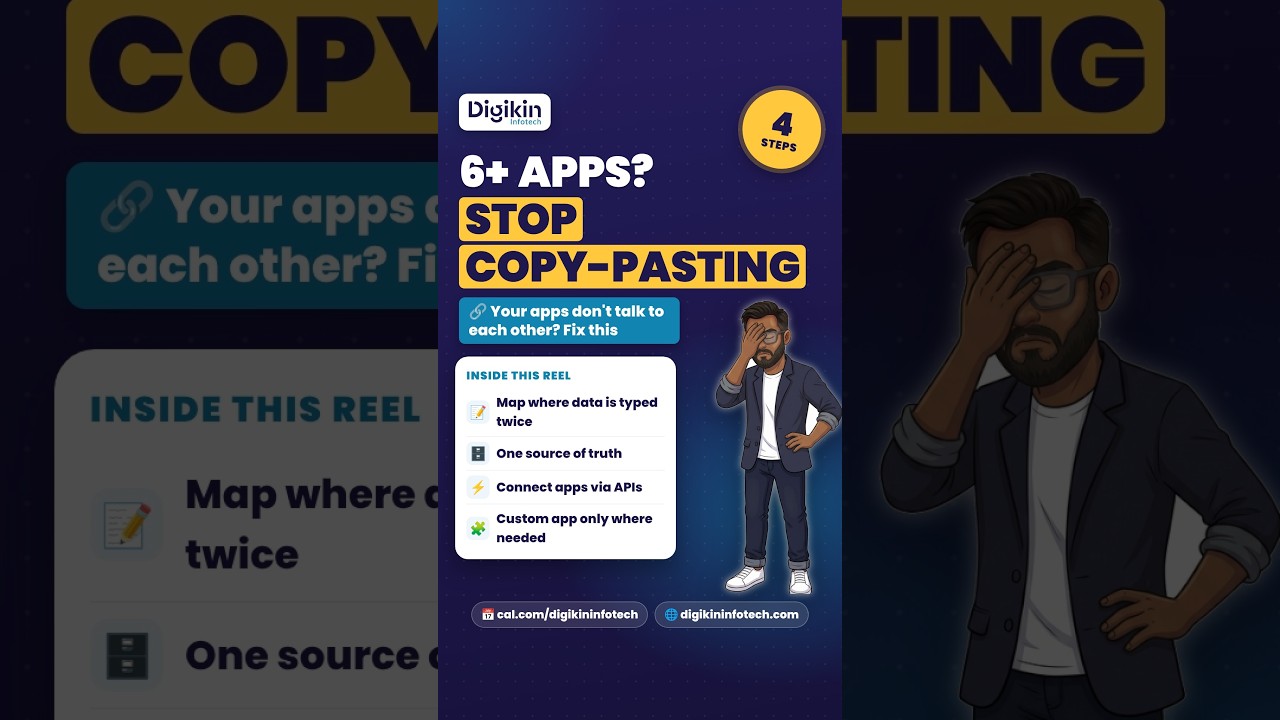
Most small businesses didn't plan to run on six different apps — it just happened. One for orders, one for invoices, one for bookings, one for payments, email, and a few spreadsheets holding it all together. Each is fine on its own. The problem is they don't share data, so the same customer and order details get typed in again and again — by you. That copy-paste is slow, and every re-entry is a chance to get a number wrong.
▶ Watch: the short version
The app pile-up is real — and growing
The U.S. Chamber of Commerce's 2026 "Empowering Small Business" report (a survey of 3,732 US small businesses with Teneo Research) found that 41% now use six or more technology platforms — up nine points in a year, and nearly three times the 2022 level of 14%. And 84% plan to use even more technology over the next two to three years.
More tools wouldn't matter if they talked to each other. They often don't. As CFOtech described the "handoff problem," an invoice is raised in one program, settled through a payment service, reflected in a bank feed, then re-entered or reconciled by hand. The owner, in the words of one founder quoted in the piece, "becomes the integration layer."
4 steps to make your tools talk to each other
You don't fix this by buying one more app. You fix it by connecting the ones you keep:
- Map where you (or your staff) type the same thing twice — that's where data falls out of sync.
- Pick one source of truth for each thing (customers, orders, stock), so every tool reads the same record.
- Connect the apps you keep through their APIs, so data moves automatically instead of by copy-paste.
- Build a small custom app only for the one workflow nothing off-the-shelf fits — not to replace everything.
The takeaway
The goal isn't fewer apps for their own sake — it's data that moves on its own. Connect what you have, keep one record per customer and order, and stop being the glue between your own tools.
"When your apps don't talk to each other, you become the integration layer."
Sources
Tired of copy-pasting between your apps? See how we connect your tools with API integrations & custom software →